Google Play Music Expanse Podcast Fight or Flight Core Temp Art
Augmenting Perception: An Interview with media artist, Refik Anadol
by Alexandra Gilliams
Refik Anadol is a Turkish-American media artist who is broadening the possibilities of art today and in the futurity. Rather than paint or marble, he uses artificial intelligence and data as textile to create mesmerizing visuals that he refers to every bit "data sculptures" and "data paintings," likewise as immersive installations. Like to the changes in the history of fine art with the invention of the pigment tube or photography, he is thoughtfully using new innovations to create art in the 21st century. He does so by using technology that is becoming increasingly embedded in our daily lives: computers, data, coding, and bogus intelligence. How, through AI and coding, can one arrive at visuals that look similar water accompanied past hypnotic audio, and are created from marine radar data sets? He is also inspired by the idea of bringing compages, or the world around the states, into the future — what if a building had a consciousness, and could dream?
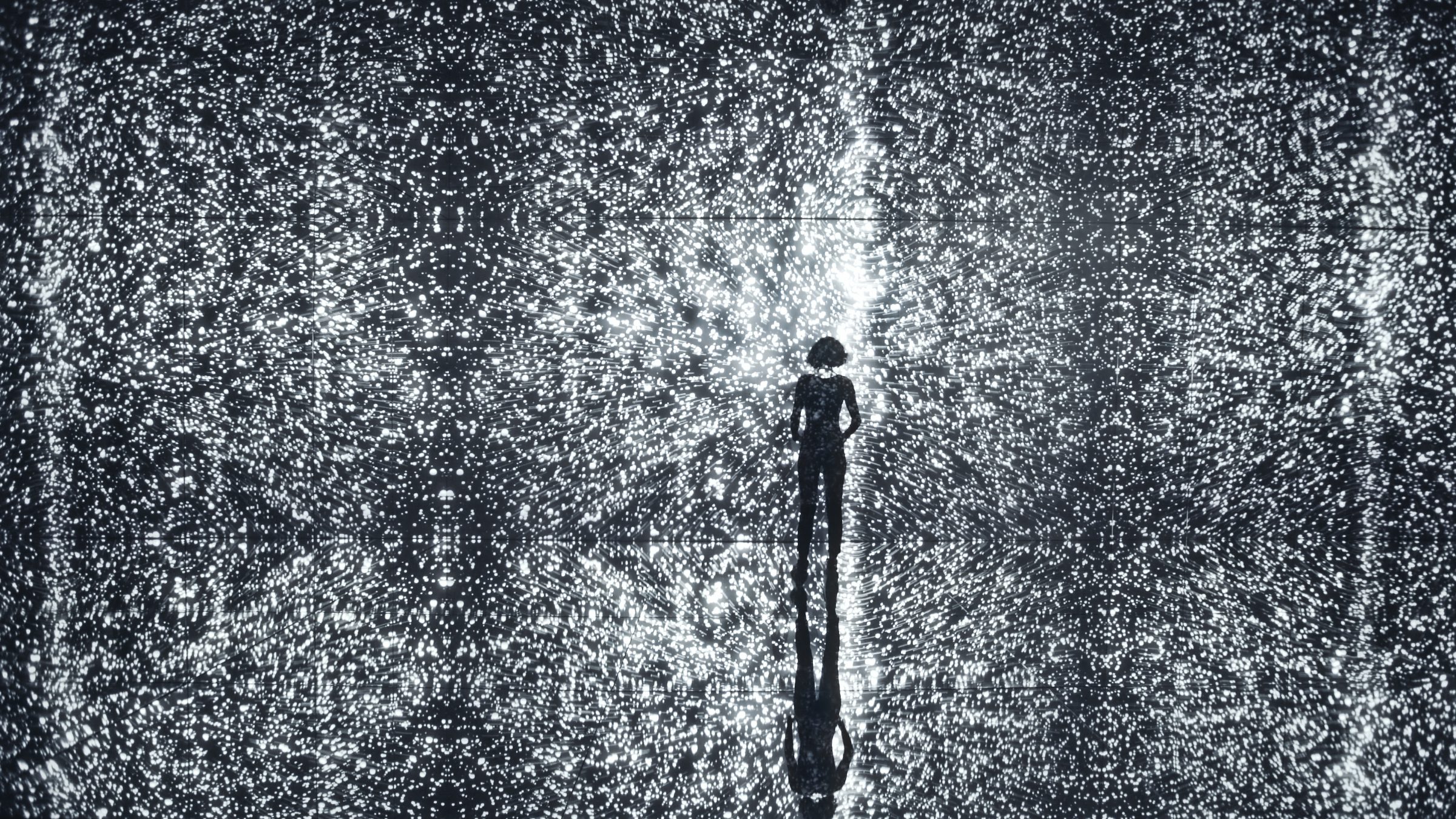
Refik Anadol,
Pladis: Data Universe,
A/V Functioning, Installation Istanbul, TR
02/07/2018 – 08/ten/2019 Room size: 8M x 3M x 4M Immersive Installation
3 Channel Video
5 Channel Audio
Custom Software
Media Server
Courtesy Refik Anadol Studio
He pursues these ideas with his studio: a diverse grouping of architects, musicians, computer programmers, and scientists that he collaborates with in social club to continue widening an already big scope of possibilities for pieces. It seems as though i of Anadol's deepest wishes is to exist able to warp time and space, all while nevertheless remaining on Earth. He creates environments such as the Infinity Room, where viewers are susceptible to lose their perception of what he refers to as our "biased world": a world wherein we are subject to gravity and other nuisances. By harnessing the invisible, such as data collected from wind or neurological data from brain scans of memories and dreams, he creates pieces that are alive, undulating and moving, and some of which evolve in real time.

Refik Anadol, Portrait
Ph: Serge Hoeltschi
Anadol currently resides in Los Angeles, California where he conjures up these monumental ideas with his studio. I sat down with him via Zoom to discuss the ability of the imagination and his speculations for the time to come.
Alexandra Gilliams: I have read about how you studied communication pattern in Istanbul earlier getting your Master's degree in design media arts at UCLA. Could you talk a fleck about what led you to create the work that you are creating now?
Refik Anadol: I got my first MFA degree in Digital Communication Design and a 2d MFA in Design Media Arts. Inside both of them, I focused on like ideas. I started using architecture equally a sheet in 2010 during my first MFA, by augmenting the perception of environments. I was using data sets from architectural drawings. In 2011, I was able to augment a 3-dimensional "data sculpture." It was almost nine years agone when I began speculating what could happen if data can become a space or, if it could go something that nosotros can affect. I recorded sounds on the street and, using this data, I constructed a 3D surface—I phone call these "data sculptures": large calibration, three-dimensional augmented surfaces with calorie-free.
I have been very into architecture and speculating about the future since my childhood. I was dreaming about my room: the walls, windows, and ceiling; I was always thinking about how they were dull and static. But I was always imagining the future — what could technology bring to humanity, how could we enhance our imagination with technology? I am very inspired by science fiction as a whole. I was eight years old when I watched Blade Runner, the movie changed my life, and this movie also depicted the time to come of Los Angeles which is where I am currently living and working with my studio. I followed my guts and pushed the power of the imagination.
At present I am a media artist—one of the pioneers in the idea of using data as a substance—creating data paintings and sculptures and trying to observe meaning behind the idea of information. I have become obsessed with data because I recollect it is an upcoming challenge for humanity to understand how machines communicate with each other, how machines are recording our memories, how they make pregnant out of these things.
AI has been the second challenge in my career. In 2016, I was very lucky to be called as ane of the first artists-in-residence at Google where I learned how to use AI. It was and then that I created my first project with AI in a public space—a data driven library using AI called Archive Dreaming. Historically, it is an important piece because it was really the first slice that used AI and interacted with machines to understand how it learns and what happens if a car can dream in a library. Earlier that, I was already using data in a public infinite. In 2015 and 2016, I was focused on data painting and information sculptures internationally and from 2016 to now, I am pushing the idea of AI a lot, simply still using nature-focused information sets: air current patterns, temperature, air quality, but also WiFi signals, bluetooth signals, 5G LTE… I am exploring information as much as I can.
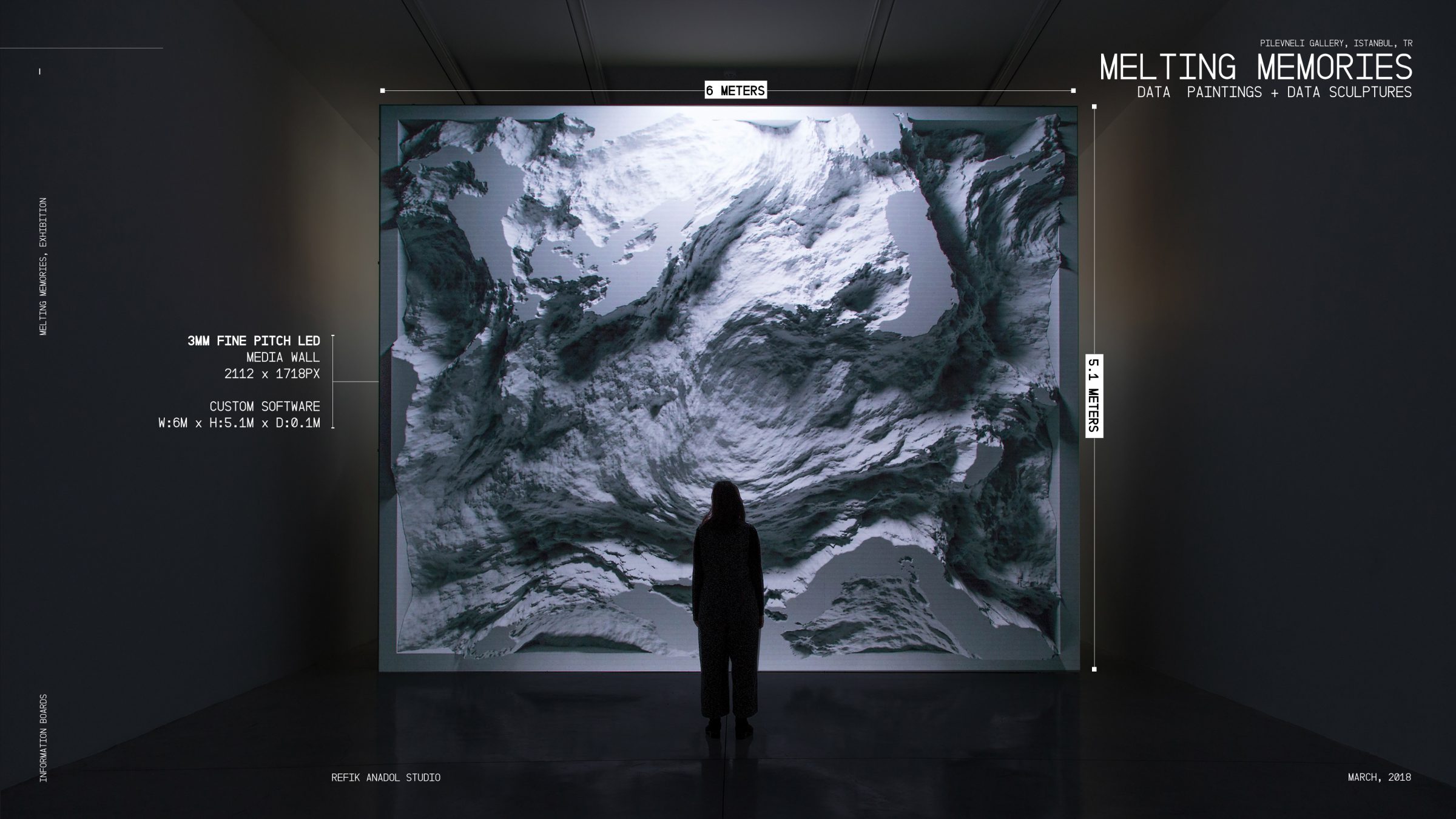
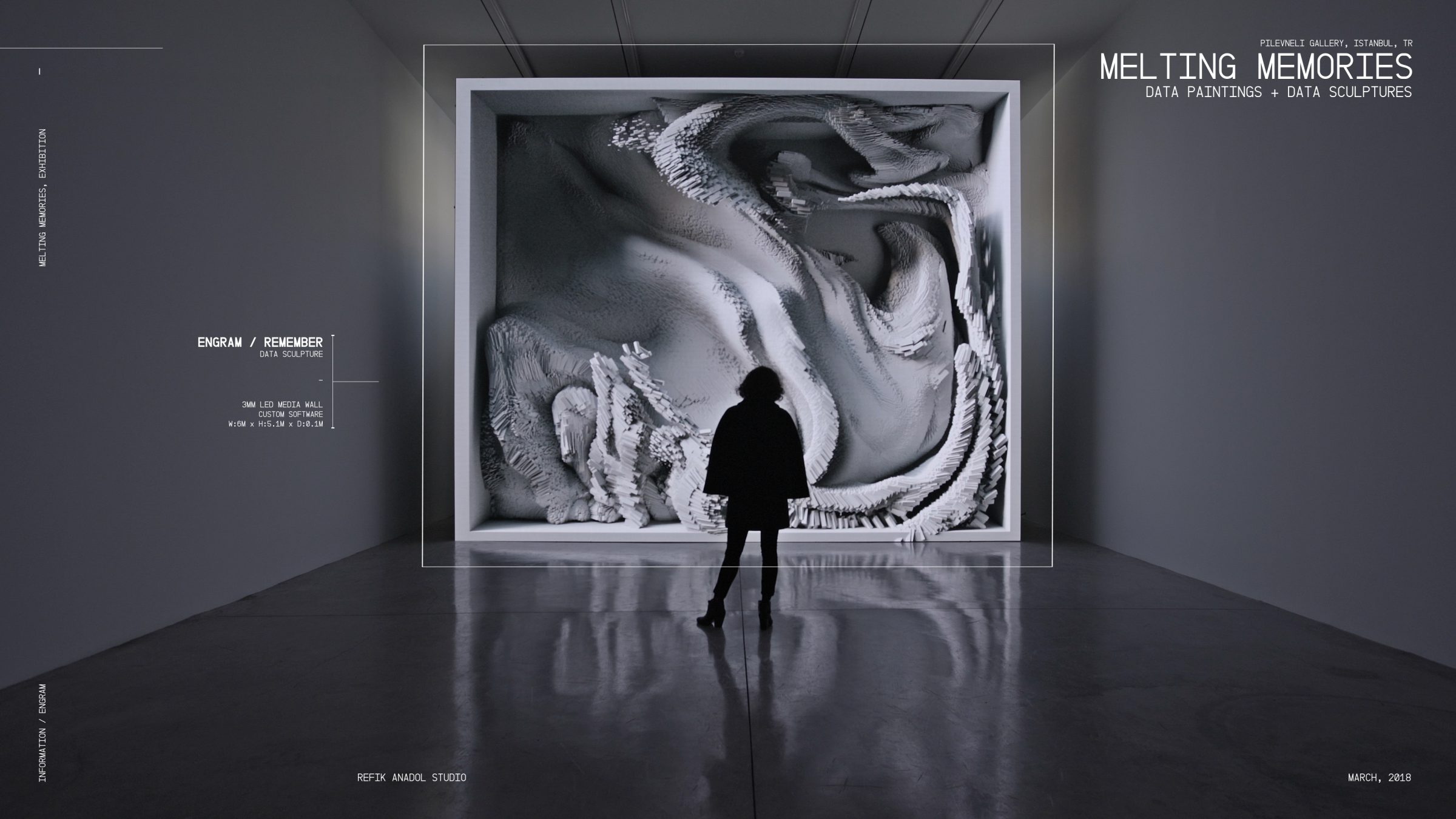
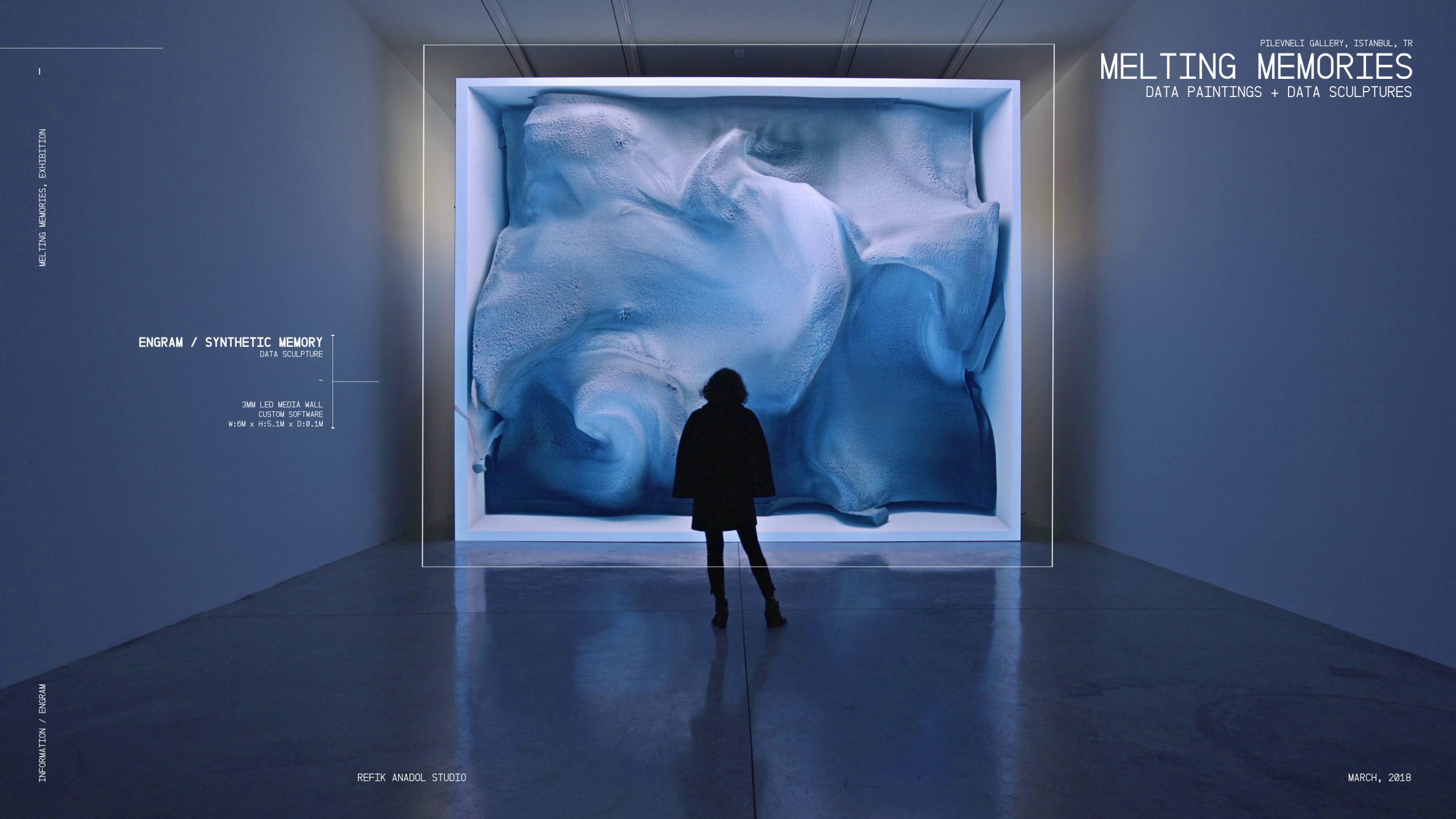
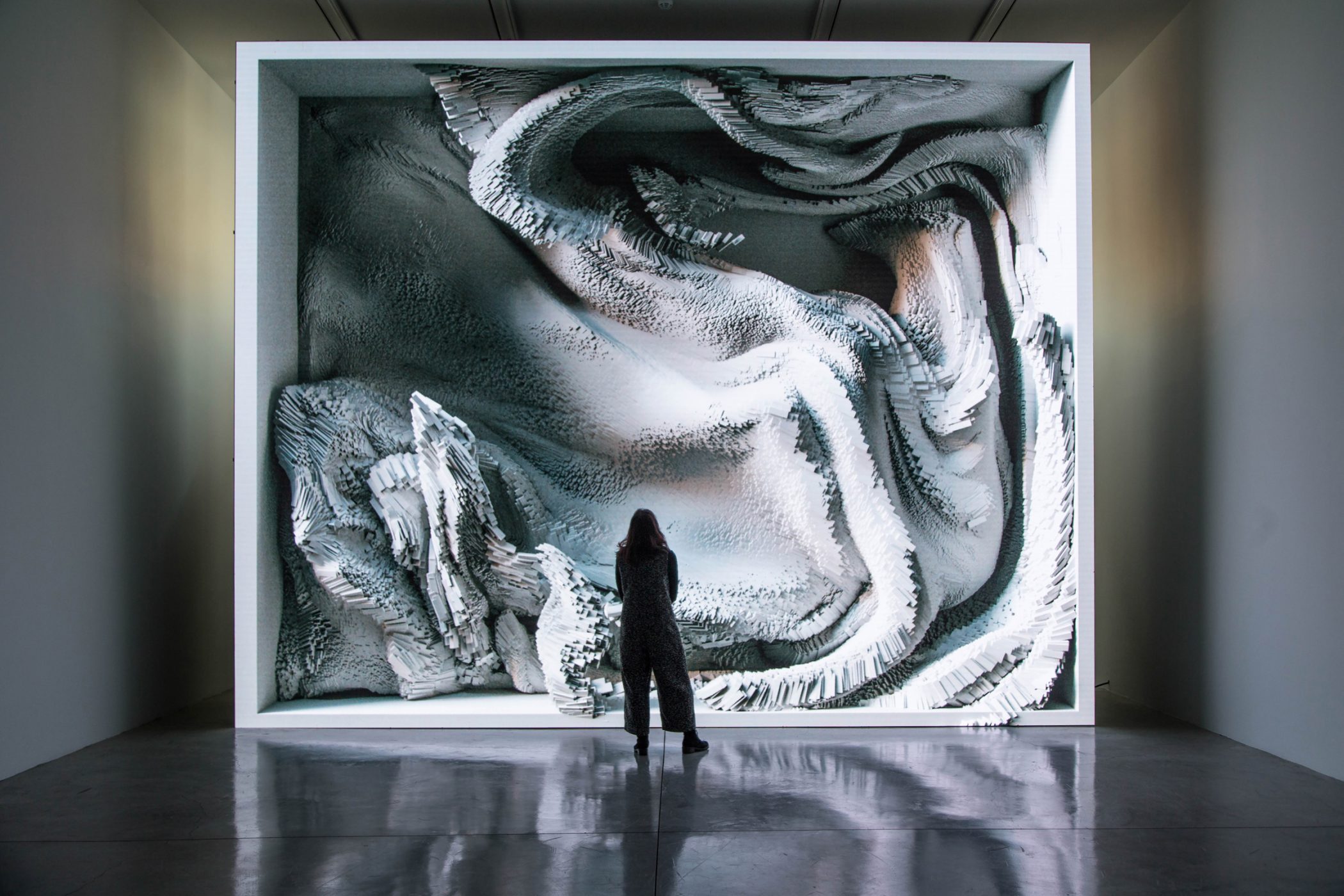
Refik Anadol, Melting Memories
Installation - Public Art
Pilevneli, Istanbul, TR 02/07/2018 – 03/17/2018 Information Sculptures
v Meters past half-dozen Meters custom LED Media Wall Information Paintings
65" 4K OLED Brandish
Custom Software (VVVV)
CNC Milled Rigid Cream
Courtesy Refik Anadol Studio
AG: In Jan 2019, I took a trip to Istanbul, which is where I first discovered your work. I saw your information sculpture "Bosphorus" at the Pilevneli Gallery. When I first walked into the room, I was amazed by the scale and the complex visuals undulating before me. I was admittedly fascinated past the fact that you transformed intangible marine radar data into something and so physical and compelling. I am curious to know more than about the kinds of narratives you follow. What does it hateful to you to want to visualize the invisible – wherein you use a non-tangible source like data, and relate information technology to other non-tangible themes such as memories, consciousness, hallucinations, dreams, wind?
RA: First, I am very inspired by our capacity for imagination, but likewise the motorcar's chapters for imagination and the distance between the two realities. In the end, I accept humbly understood that data is information for a automobile, and that making something truly meaningful with it is a big journey. For example, AI can look at the patterns of the motion of h2o for 50 years, and it can learn how the h2o moves merely, you still need a human being next to an AI to say "All right, I want to utilise this 'thinking castor,' this 'brush' that tin think, and I want to paint with this brush in a way that is dynamic…" Where information technology can simulate life, or nature.
I am really inspired by simulations in general. In my artwork, yous can run into two types of algorithms: ane is a noise algorithm which creates landscapes, the other is for fluid dynamics. I am extremely inspired by water, in life, and nature. So I wanted to know what would happen if an AI could larn how to movement in h2o, and what could it create? And how would it feel, when a machine creates a sensory experience? Are we getting closer to how we might spotter water in the sea? Of course not, but the endeavour is in the simulation.
I am very inspired by Philip K. Dick, and in particular this quotation: "Reality is that which doesn't go away when you end believing in it. A simulation is that which doesn't stop when the stories become abroad. Stories are responsible to our human desire for resolution, merely a simulation is responsible but to its own laws and initializing conditions. A simulation has no moral, prejudice, or meaning. Like nature, information technology just is."
He is my hero when I call back near simulations —the Bosphorus, Black Ocean, or an AI recreating nature. It is interesting to think about how machines can become our collaborators to simulate life. Why do we need that is another question. But machines are becoming more developed, they are learning fast, and the question is: "What are we doing with them?"
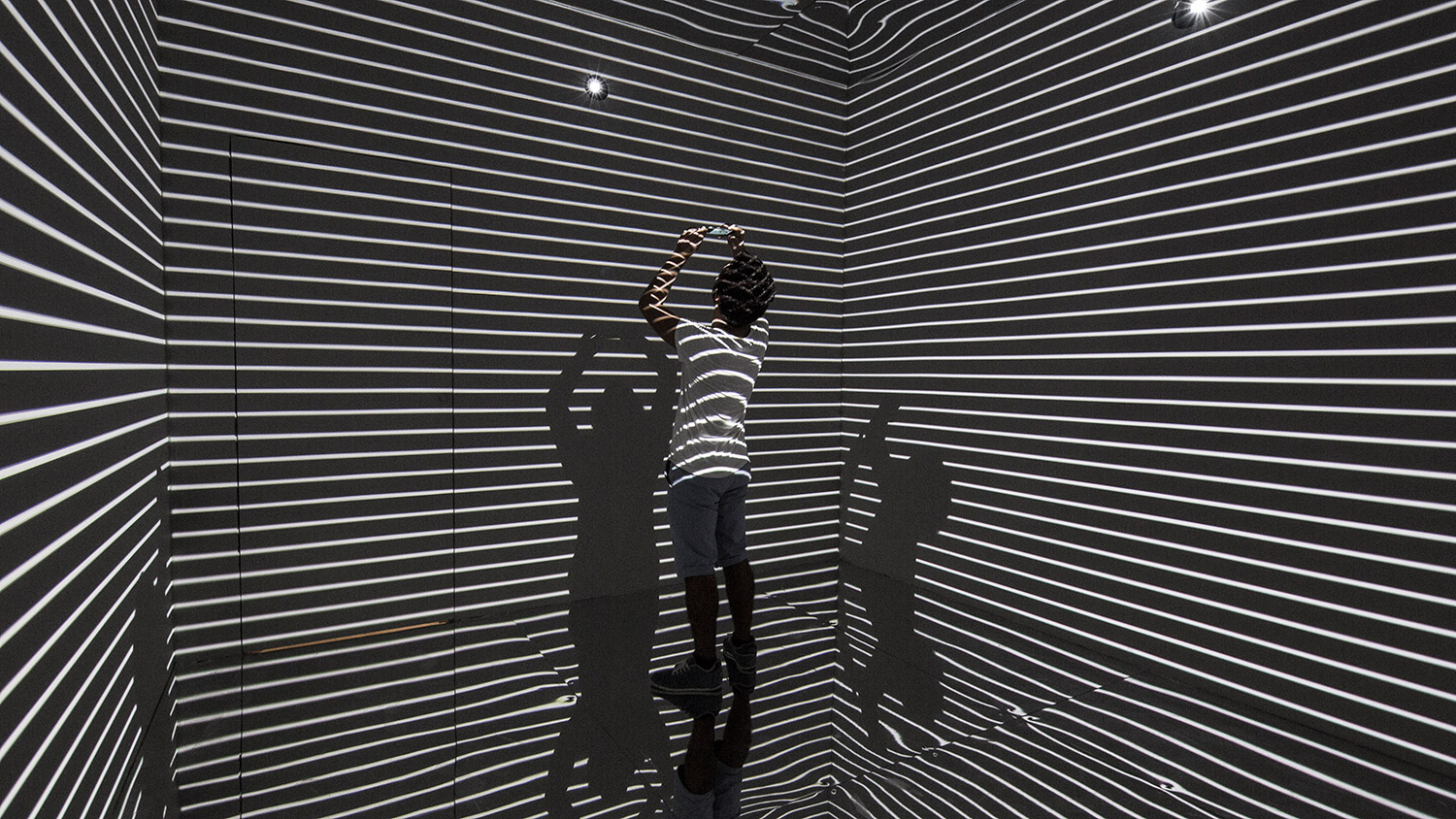
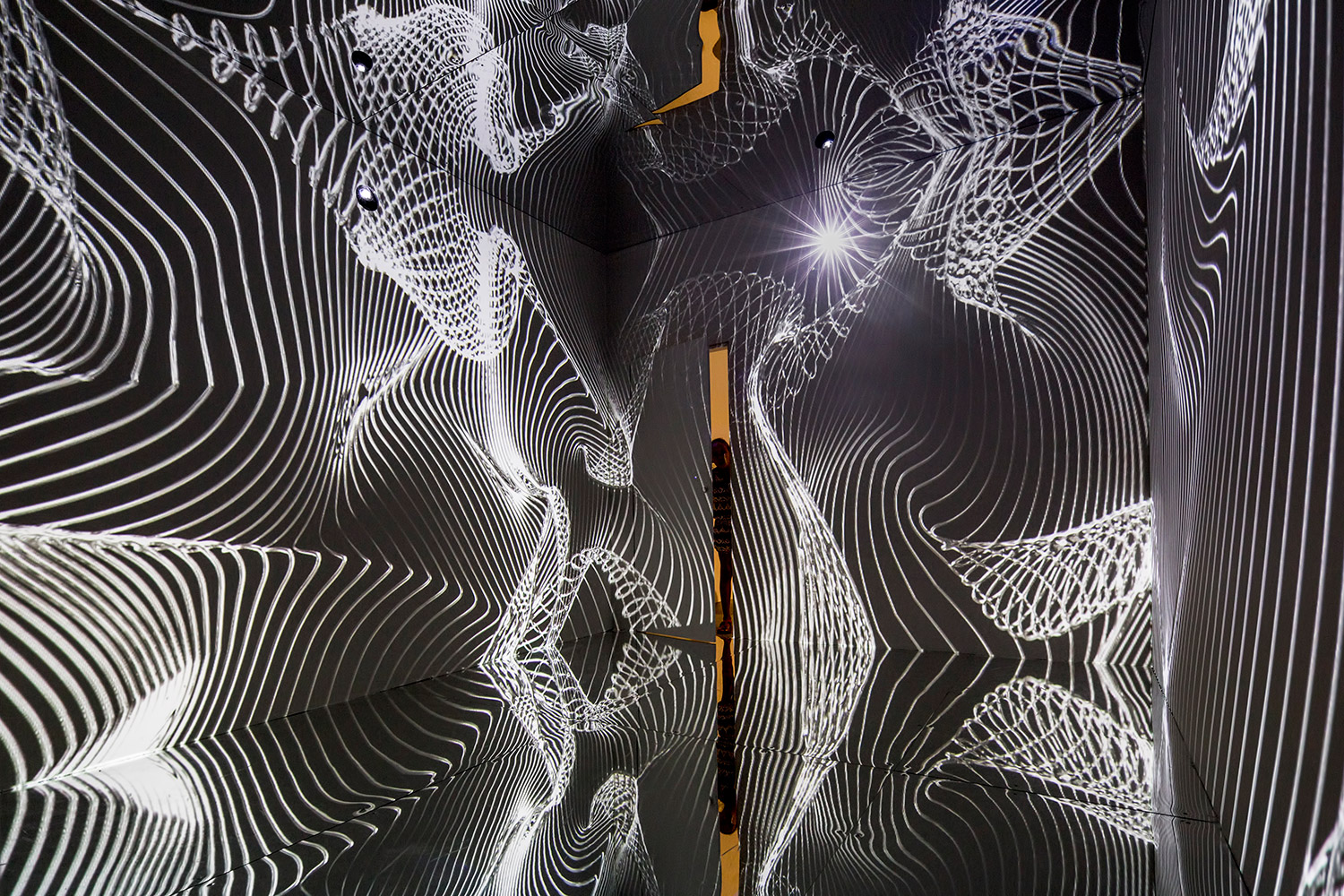
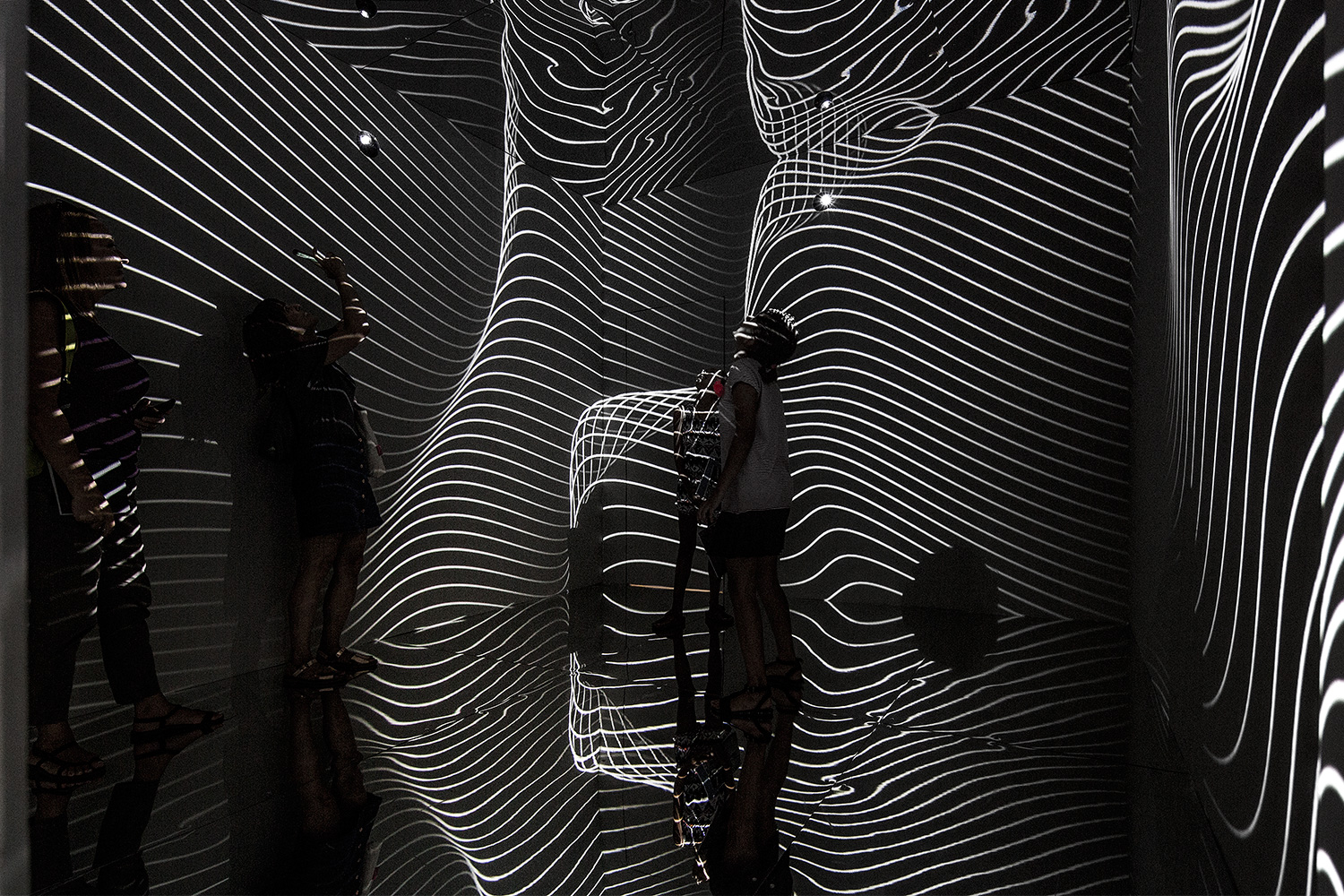
Refik Anadol,
Infinity Room / Installation - Public Art
Istanbul, TR 09/05/2015
Room size: 4M x 4M x 4M
Medium: Four channel Audio/Visual Installation running on custom software Original experience: xiv Minutes, 7 algorithms
Courtesy Refik Anadol Studio
AG: With a work like "Infinity Room," the piece is meant to "induce a country of consciousness in which the subject'southward sensation of physical self is transformed by being surrounded by an all encompassing surround, creating a perception of presence in a not-physical world." Could you elaborate on the unlike kinds of feelings that you hope to evoke in your viewers?
RA: I retrieve when we apply architecture and applied science with a purpose, we tin create feelings that become embedded in our Deoxyribonucleic acid.
Everyday nosotros employ machines. Nosotros await at 1 first thing in the forenoon, and it can be the last thing we look at at night. We are surrounded by systems that know what nosotros swallow, what we say, where nosotros go, what we buy… our free will is in the hands of machines already. What I am saying is that, in a earth that is non so far off, I think nosotros will have more than inspiring experiences.
Infinity Room is an attempt to create a language that is for anyone, any age, and any groundwork. I am very powerfully trying to find a common footing for humanity. I detest borders, I hate separating things in life — I am trying to notice things that connect u.s., and I retrieve if art, science, and technology are purposefully used together, we can create these experiences.
Infinity Room is likewise an attempt to find a super simple architectural space. Yous open a door, and fourth dimension and space melts. Backside that door, there is no ceiling… in that location is no floor, corner, nor wall. In that room, a machine creates alternative realities, where you can step in and relish. You lot are removed from this "biased" world of physicality — nosotros are based in gravity, our bodies are sagging in time and infinite [laughs]. Merely what happens if, just for a moment, nosotros disconnect from this "biased" globe. What will happen if nosotros step into this universe that doesn't belong to this Earth, but can exist?
This artwork travelled to 48 cities in the world on every continent, except Antarctica. I wish I could do a project in Antarctica, but not even so [laughs]. More than 2 million people explored this. I call this a "inquiry project," because when you accept a slice that is going around the earth and touching different cultures, information technology becomes a piece of research.
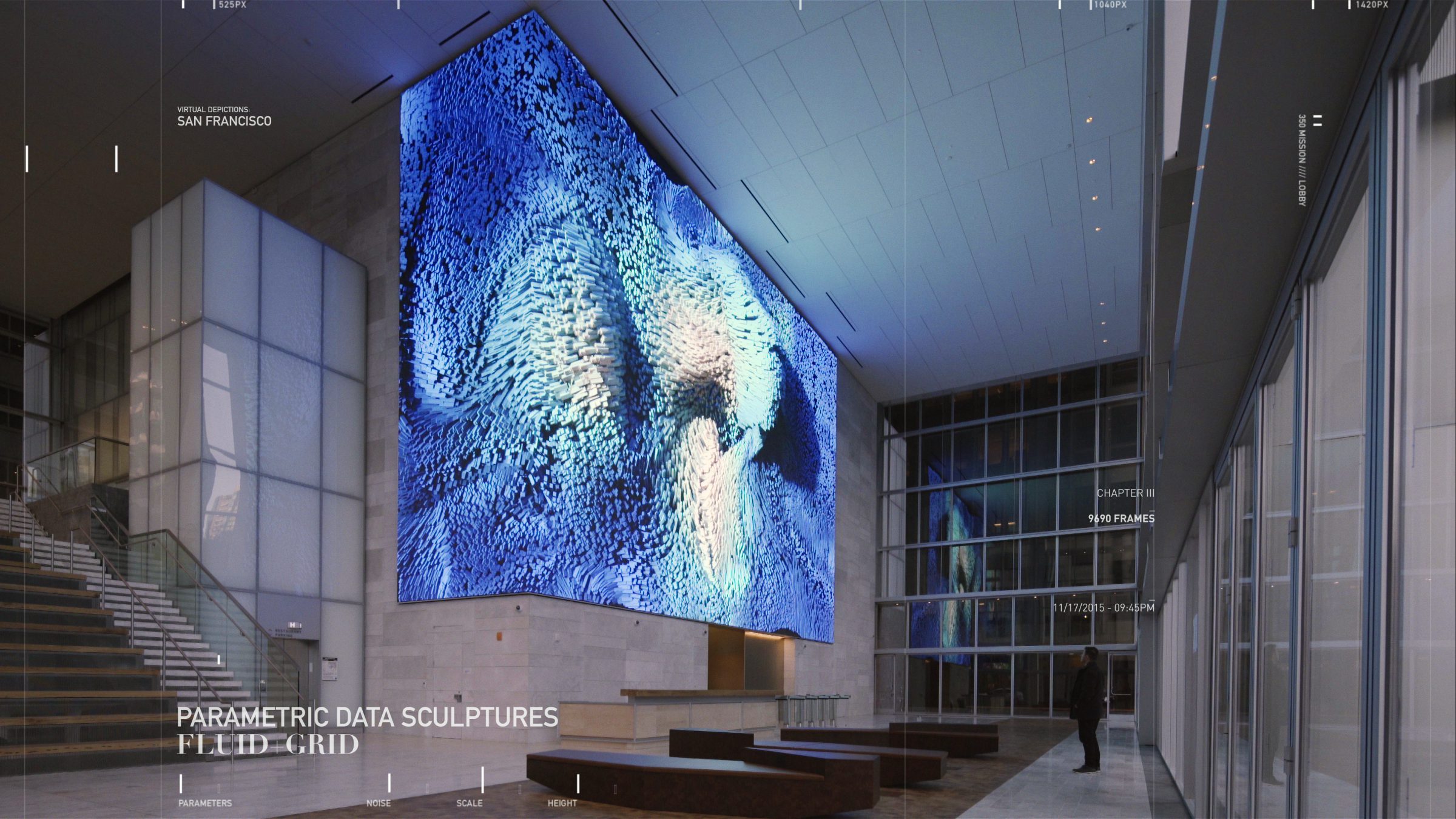
Refik Anadol, Virtual Depictions San Francisco Public Fine art Deputed by Kilroy Realty Corporation, John B. Kilroy, Jr. San Francisco, US 09/thirty/2015 Medium: 6mm LED Media Wall Dimensions: xx′ x forty′ Custom Software (VVVV) 90 minutes long dynamic visual feel in 12 chapters 8 Channel sound Courtesy Refik Anadol Studio AG: Were y'all able to get feedback from your viewers on these different continents?
RA: What I understand [from exhibiting Infinity Room] is that it doesn't matter where you are from. Information technology doesn't matter what your past is — your culture, your knowledge, the intellectual quality… it touched people, from what I learned.
AG: Could you tell me most "Sense of Place," the slice in Oakland, California that recently opened?
RA: I started speculating what a place could sense, and I was inspired past research conducted by three scientists who won the 2014 Nobel Peace Prize for studying how we know where we are in space. This nature mail service came upwardly, and I was so inspired by what a studio tin exercise in a world where we are creating our ain perception of space. In a world where, with neuroscience, agreement how infinite "melts" and how it is synthetic. Sense of Identify is coming from this noble inquiry. I am speculating what machines tin can sense, and if can nosotros look at it through machine algorithms. How tin can nosotros meet the invisible world around u.s.a.?
This work uses WiFi and bluetooth signals, current of air patterns, and environmental data that the building senses. I of the fundamental uses for architecture is that it is protecting us from Female parent Nature. What happens if at that place is an artwork that draws attention to this invisible world around us? Making the invisible visible through algorithms. It is a "data painting" displayed on a wall. Information technology is 25 x 25 anxiety. We take a weather station that senses the rain, humidity, temperature, wind — which are all connected to this artwork.
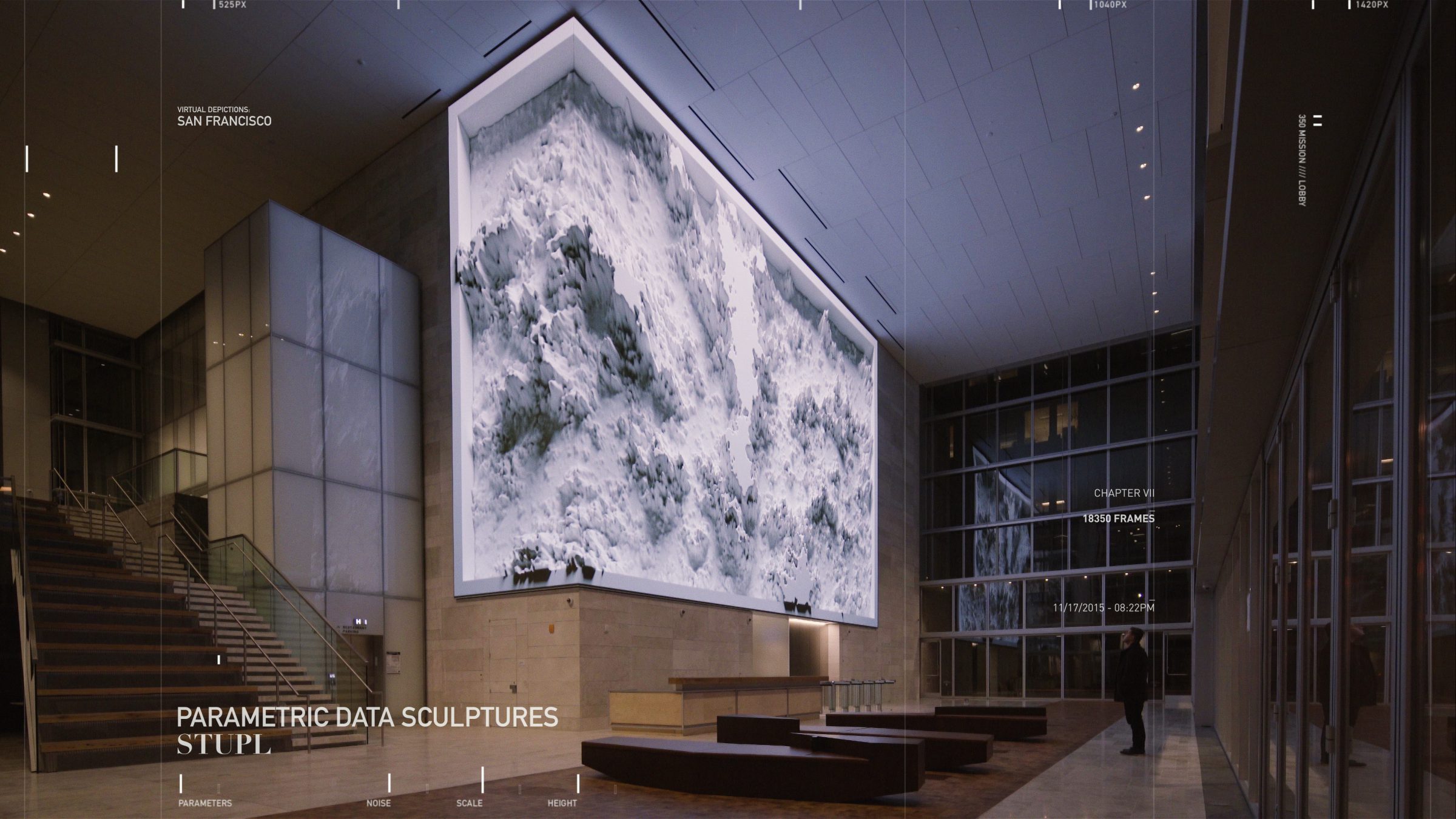
Refik Anadol, Virtual Depictions San Francisco Public Art Commissioned by Kilroy Realty Corporation, John B. Kilroy, Jr. San Francisco, Us 09/30/2015 Medium: 6mm LED Media Wall Dimensions: 20′ ten 40′ Custom Software (VVVV) 90 minutes long dynamic visual feel in 12 chapters 8 Channel audio Courtesy Refik Anadol Studio 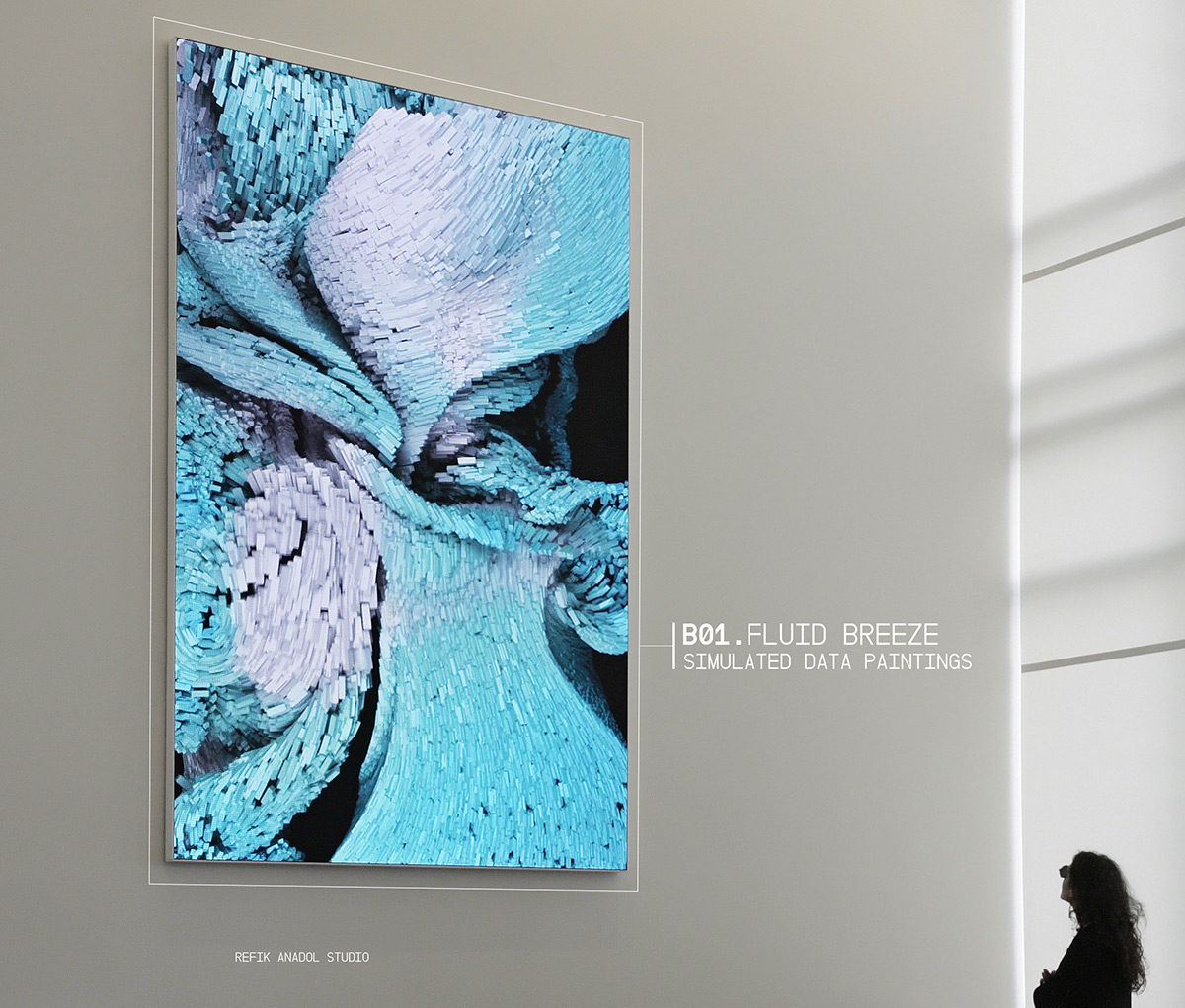
                Refik Anadol, Air current of Boston Data Paintings
Installation - Public Art Commissioned By
                The Fallon Company
Joseph F. Fallon
Richard Martini
Soundtrack : Goldmund / Door Of Our Domicile Audio Fx Blueprint : Kerim Karaoglu
                Boston, US 01/01/2017
AG: I am interested to know about your process and how you lot create your projects with your collaborators. I imagine that it is more complex than writing a code, inputting the information, and right away you have these abstract visuals. Could you tell me a bit nigh how you come upward with your ideas, so develop and execute them?
RA: My last solo project was in 2011, which is when I establish out how challenging information technology is to create a data sculpture, or a large scale piece. I found that I don't take fourth dimension to go deeper [into the artwork], so I thought most what could happen if I started a studio, where we could work on these challenges together as a collaborative imagination, similar an organic auto. The dream to open up a studio is one of the reasons why I joined the UCLA Media Arts section where I received my second MFA. Information technology was my target, and I was hoping to create a project in a public space, such as Disney Hall Dreams, Frank Gehry'south project, and open it, and as well work with pioneers in the field such as Casey Reas, Christian Moeller, Jennifer Steinkamp… they were my iii wonderful professors at UCLA, who were my mentors, who trained me. That's how I started, and now there are 12 people in the studio. The median historic period is 25, everyone can program and lawmaking. We accept designers, musicians, scholars, neuroscientists, architects, machine engineers, data scientists — a very diverse grouping of people that can imagine together.
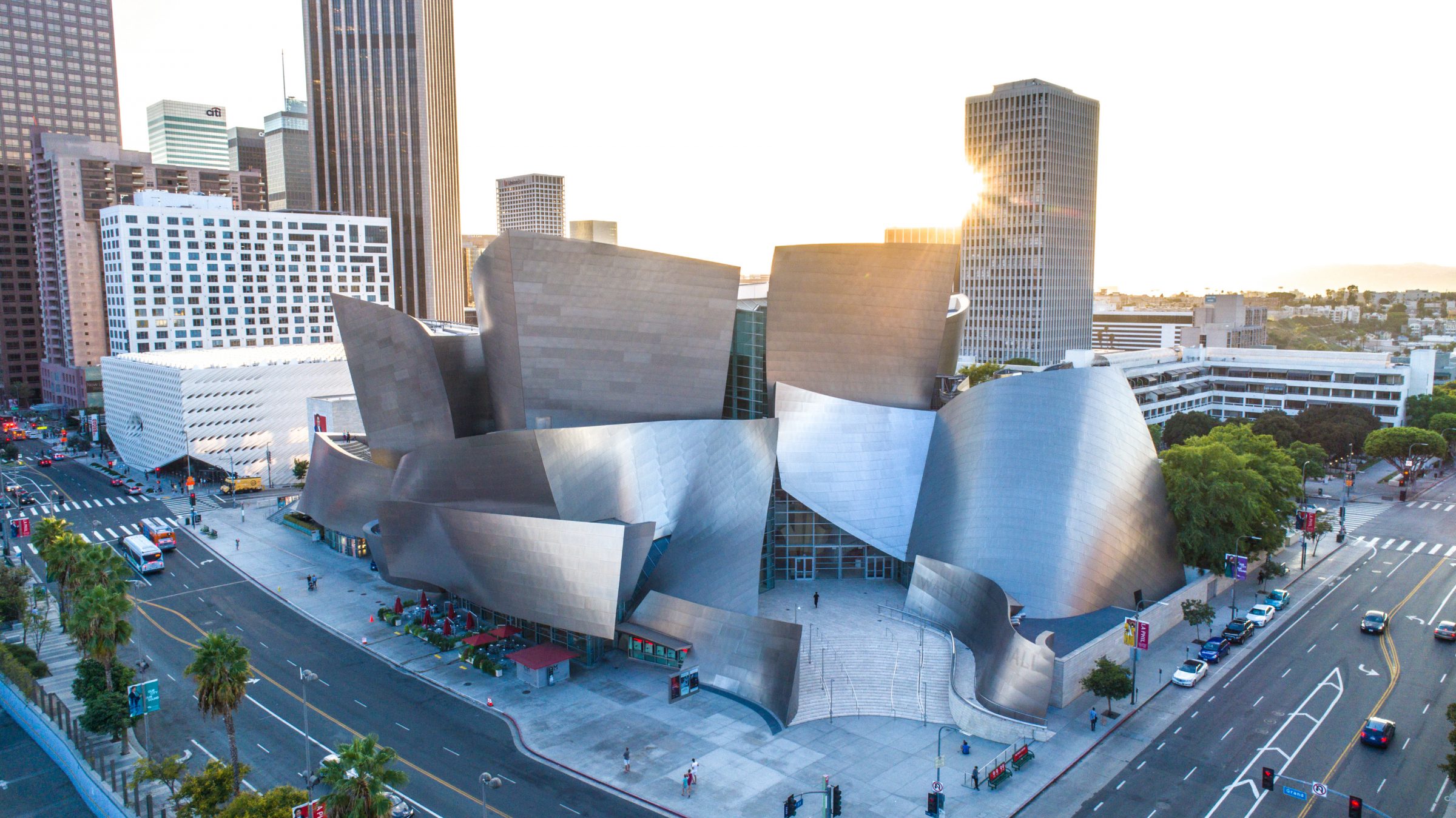
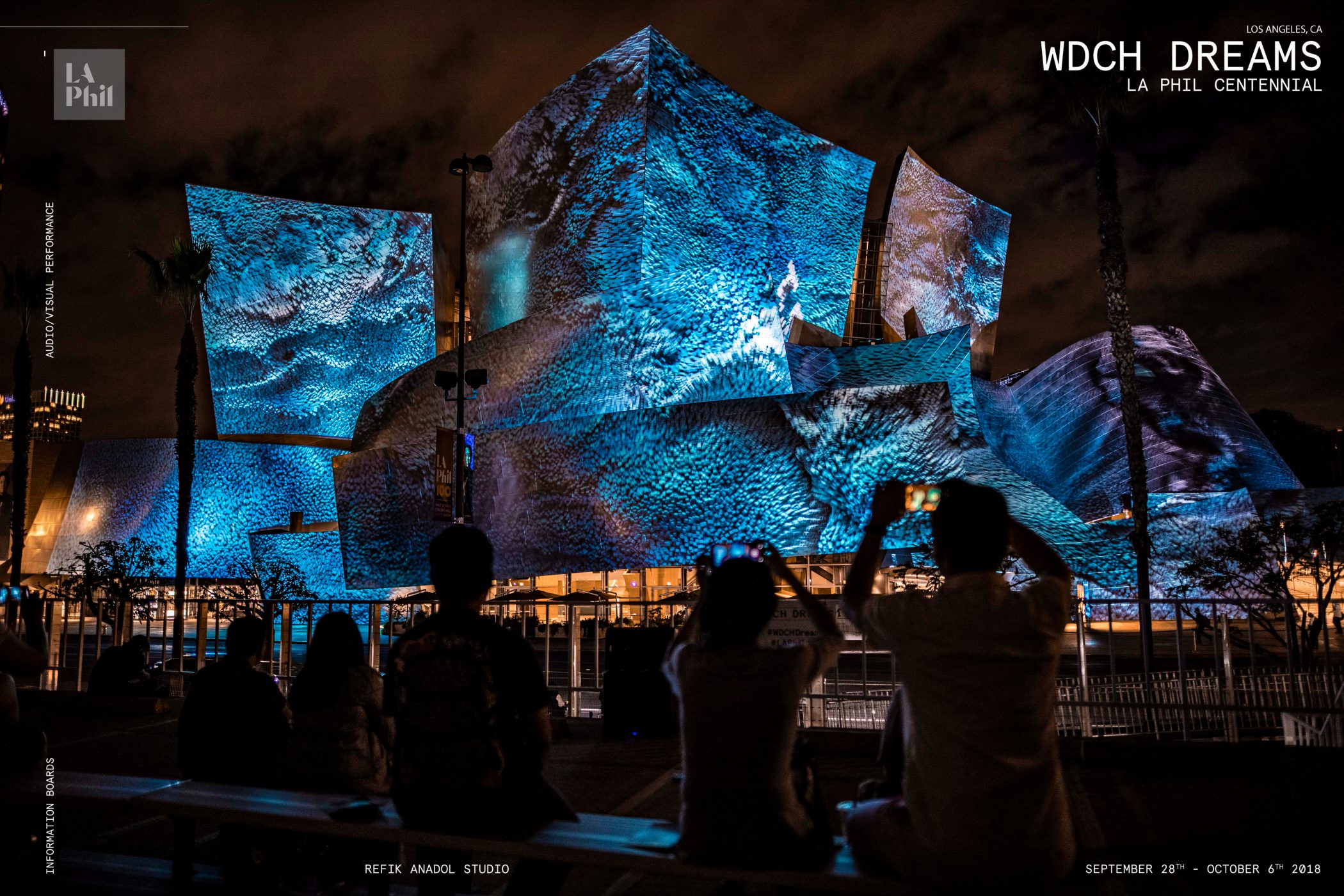
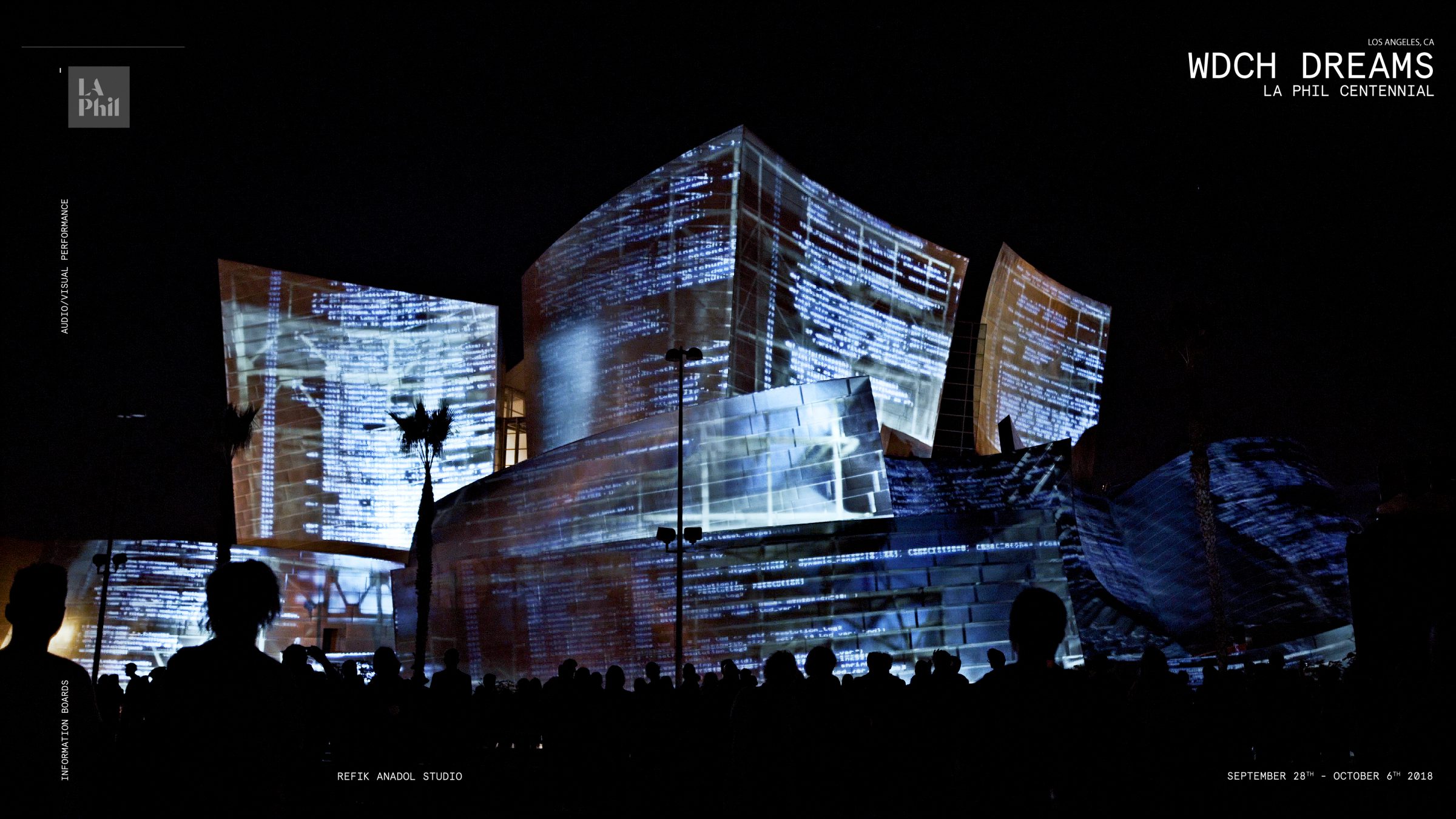
                                  The Los Angeles Combo has collaborated with media artist Refik Anadol to celebrate our history and explore our futurity. Using machine learning algorithms, Anadol and his team has developed a unique machine intelligence arroyo to the LA Phil digital archives – 45 terabytes of information. The results are stunning visualizations for WDCH Dreams, a project that is both a week-long public art installation projected onto the building's exterior skin and a season-long immersive exhibition inside, in the Ira Gershwin Gallery
                                  To make Walt Disney Concert Hall "dream," Anadol utilized a creative, computerized "mind" to mimic how humans dream – by processing memories to form a new combination of images and ideas. To accomplish this, Anadol worked with the Artists and Machine Intelligence program at Google Arts and Civilization and researcher Parag K. Mital to apply machine intelligence to the orchestra'south digital archives – nearly 45 terabytes of data – 587,763 image files, one,880 video files, one,483 metadata files, and 17,773 audio files (the equivalent of 40,000 hours of audio from 16,471 performances). The files were parsed into millions of data points that were then categorized past hundreds of attributes, by deep neural networks with the capacity to both recall the totality of the LA Phil'southward "memories" and create new connections between them. This "data universe" is Anadol's material, and car intelligence is his artistic collaborator. Together, they create something new in image and sound past awakening the metaphorical "consciousness" of Walt Disney Concert Hall. The result is a radical visualization of the organization'due south first century and an exploration of synergies between fine art
                                  and applied science, and architecture and institutional retentivity.
To concretize this vision, Anadol is employing 42 large scale projectors, with 50K visual resolution, 8-channel audio, and 1.2M luminance in total. The resulting patterns, or "data sculptures" formed by the machine'south interpretation of the athenaeum volition be displayed directly onto the undulating stainless-steel exterior of Walt Disney Concert Hall.
WDCH Dreams' accompanying soundtrack was created from hand-picked audio from the LA Phil's archival recordings. Audio designers Robert Thomas, and Kerim Karaoglu augmented these selections by using machine-learning algorithms to observe like performances recorded throughout the LA Phil's history, creating a unique exploration of celebrated audio recordings.
Inside Walt Disney Concert Hall, in the Ira Gershwin Gallery, is an immersive and interactive companion installation, offering a unique, one-on-ane feel for each gallery visitor. The exhibition presents the entire LA Phil digital archives in a non-linear way. The visitor, via a touchscreen interface, can interact with the archives in multiple means: via a sunburst timeline; through curated moments highlighting milestones in the LA Phil'south 100-year history; and by delving into to the entire data universe that tin can exist uniquely manipulated by each gallery visitor. The space will be re-imagined as a mirrored U-shaped room with two-channel project. Visuals will exist projected onto the mirrored surface giving the company a truly immersive, 360-caste experience. 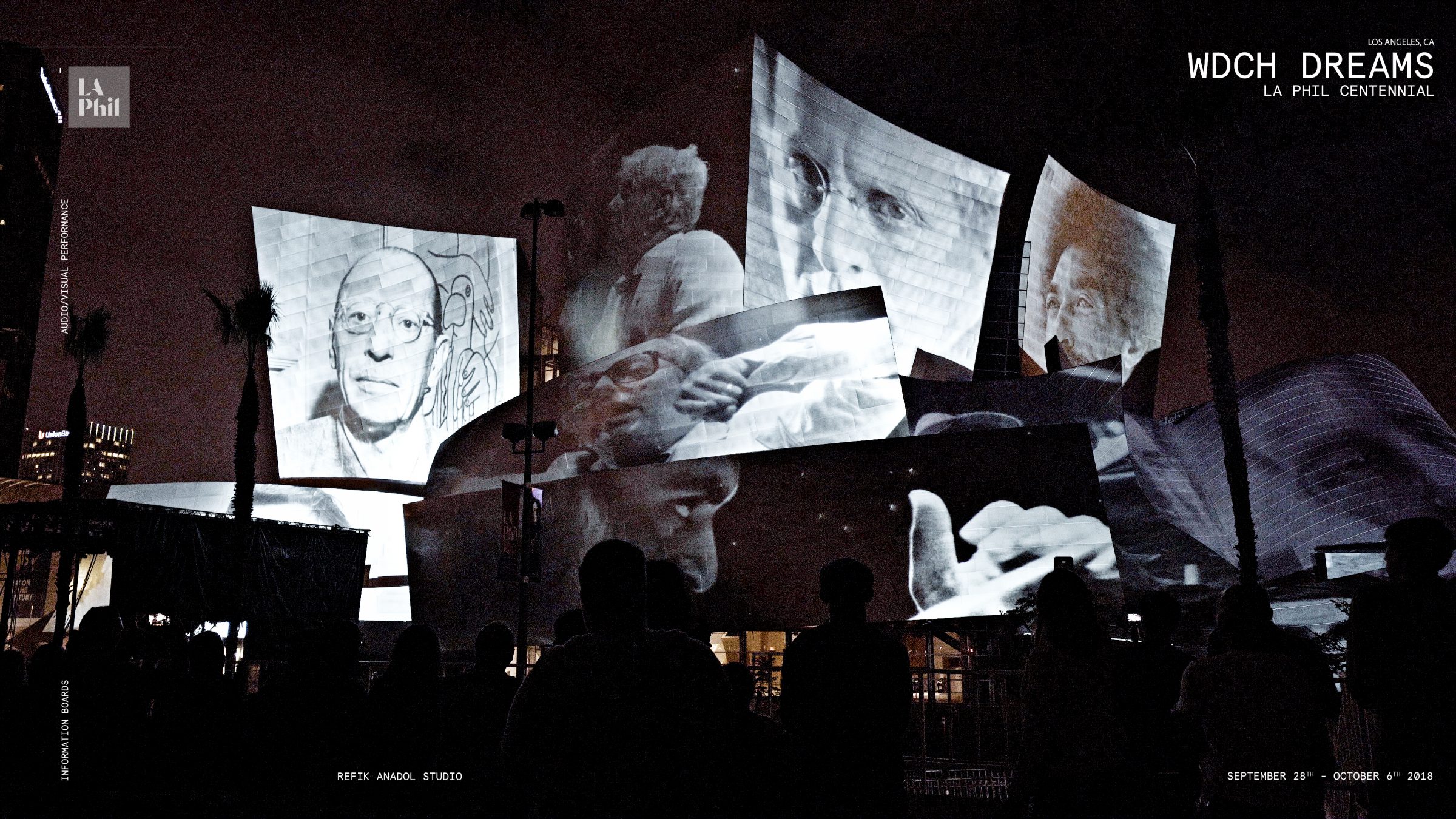
Refik Anadol, WDCH Dreams Public Art - A/Five Performance Courtesy Refik Anadol Studio AG: Nearly of your pieces are meant to be viewed in public spaces — the Walt Disney Concert Hall in Los Angeles, for instance — pregnant that these works are temporarily shown. Do you consider showing these same pieces in new ways, or are your pieces meant to be ephemeral?
RA: For me, art should be [displayed] in a public space. If art is just for galleries and museums, information technology is onetime school, or dull. [laughs] Imagine one hundred years from at present, nosotros will probably be proverb that humans put art in these buildings, and that you had to open a door and behind that door is art. I think that is so cheesy. In public spaces, there is no fourth dimension. There is no get-go, in that location is no door, at that place is no ceiling nor floor, at that place is just life. Since 2009, I accept never given upwardly on public spaces.
I have made some ephemeral and some permanent pieces. In Portland, in that location is a printed iii-dimensional sculpture, in Oakland, Las Vegas, Dubai, Seoul, London, Istanbul, New York, Chicago. We have diverse artworks that are around the globe, and are permanent.
I accept pieces that, using sensors, sensor the infinite and change in real fourth dimension. I accept a piece that represents frozen memories from the metropolis of Portland, 140 years of data, recorded and frozen. Some of my pieces correspond life, which is changing and complex, and some that are more nigh ideas that have been frozen in fourth dimension… Fourth dimension and space melts.
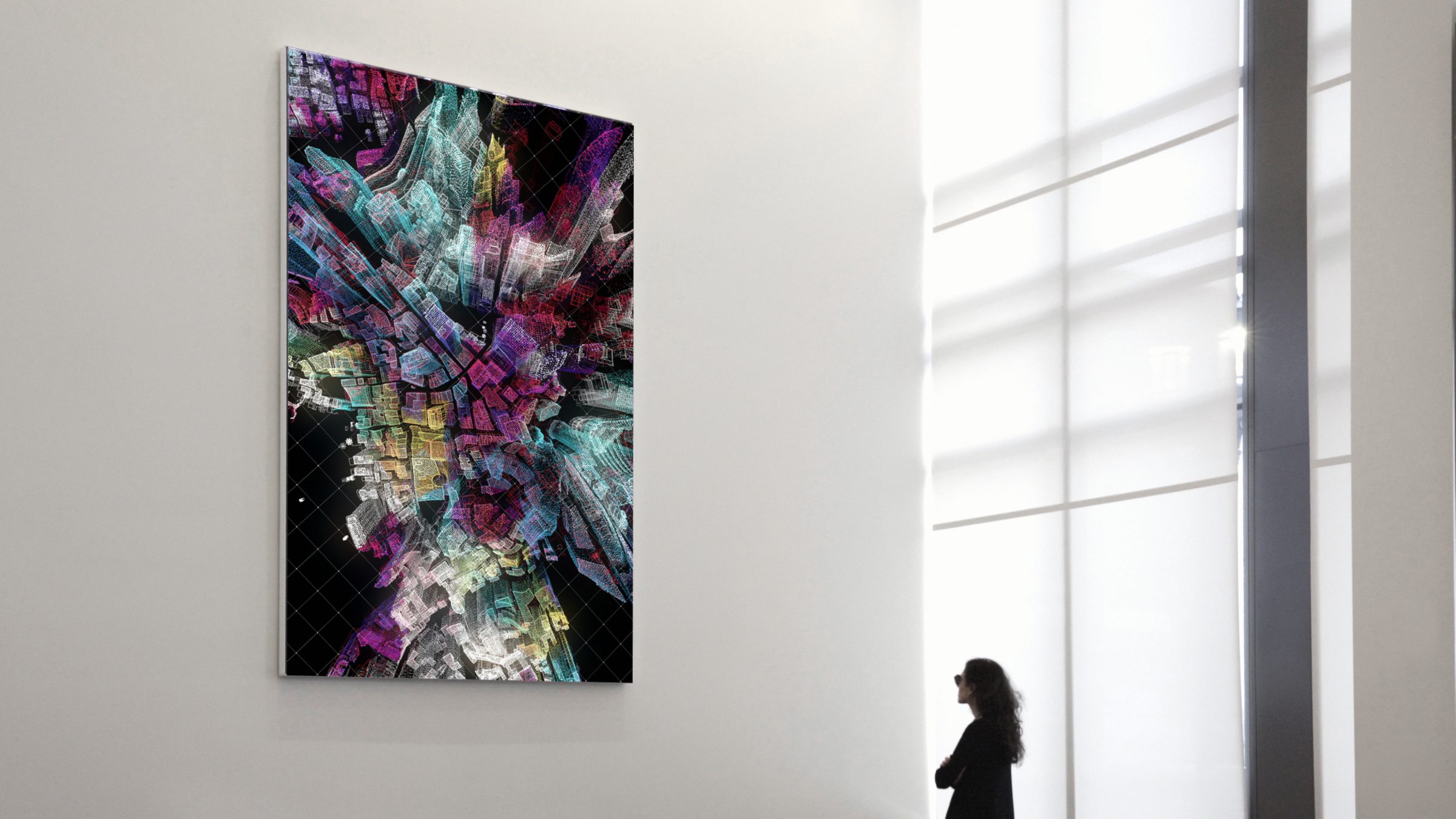
                Refik Anadol, Current of air of Boston Data Paintings
Installation - Public Fine art Commissioned By
                The Fallon Company
Joseph F. Fallon
Richard Martini
Soundtrack : Goldmund / Door Of Our Home Audio Fx Pattern : Kerim Karaoglu
                Boston, US 01/01/2017
AG: During the pandemic, have you began considering making pieces in different formats, or diffusing them in a new manner?
RA: Yep, and this has been challenging. Since 2016, we have been creating Car Hallucinations and I am lucky to say that the slowing down of life during the pandemic has helped me. Life was so fast, with long to-do lists, dragging yous somewhere else, to make other things…
In the studio we had been researching a lot with automobile algorithms and then nosotros decided to piece of work with one of the largest information sets in the earth of nature. Nosotros trained a neural network with 70 meg photos available from around the world, and then created an AI that is dreaming of nature.
In the U.s.a. especially, it was very common, at least in California, to enjoy nature, to become hiking… but during the early months of the pandemic, it was incommunicable; nosotros were trapped. What will happen if AI can simulate nature for us? We are trying to recreate these experiences in life that create a similar feeling. Being in nature is incredible, only in that location are moments in life where you cannot go. So how can nosotros use AI to reinterpret a world that nosotros cannot see or touch, and go a feeling of beingness there?
We are also working with breakthrough calculating since February. Nosotros are speculating with quantum mechanics. I am always playing with reality in my work, with fourth dimension and space as my main materials. What will happen when quantum computing begins interfering with humanity, how tin can we use quantum mechanics, and what volition happen to our memories and dreams? Who will ascertain what is real? If science proves that there is an alternate reality, that there are multiple dimensions, how do nosotros know where we are? It's an attempt to empathize this.
We are also working with the Human Connectome project, the world's largest neuroscience database that allows you to look at the patterns of homo brains and its functions. Technically there are data sets of encephalon scans from 4500 people, from 6 months to 105 years old, in order to sympathize how the encephalon works. We are currently collaborating with this team to unlock this data.
This projection would be figurative, but also "imaginary." What happens when nosotros remember is Melting Memories and likewise what happens when nosotros learn, what happens when we imagine, or dream? Can nosotros catch these moments? These are "mind spaces."
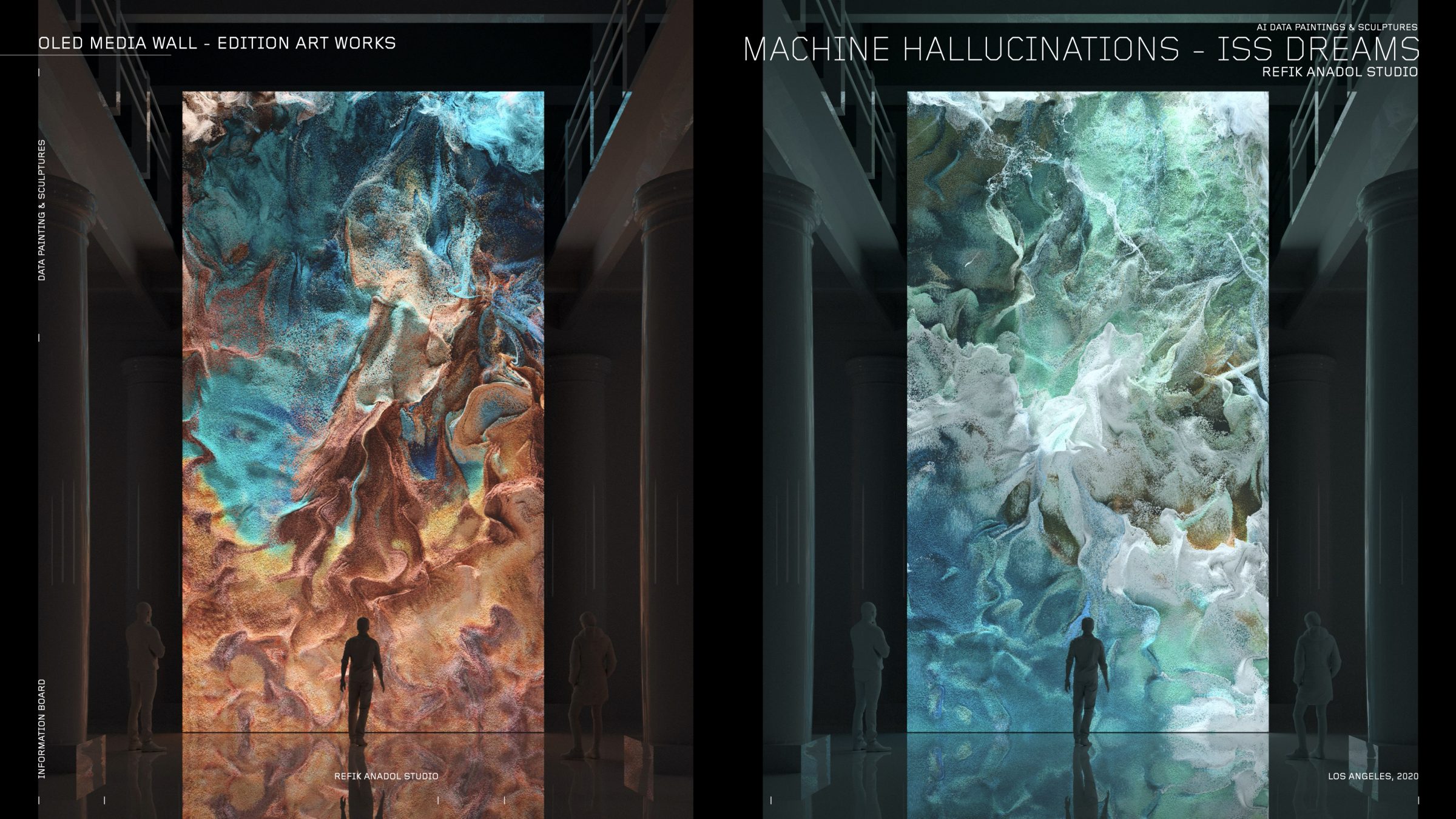
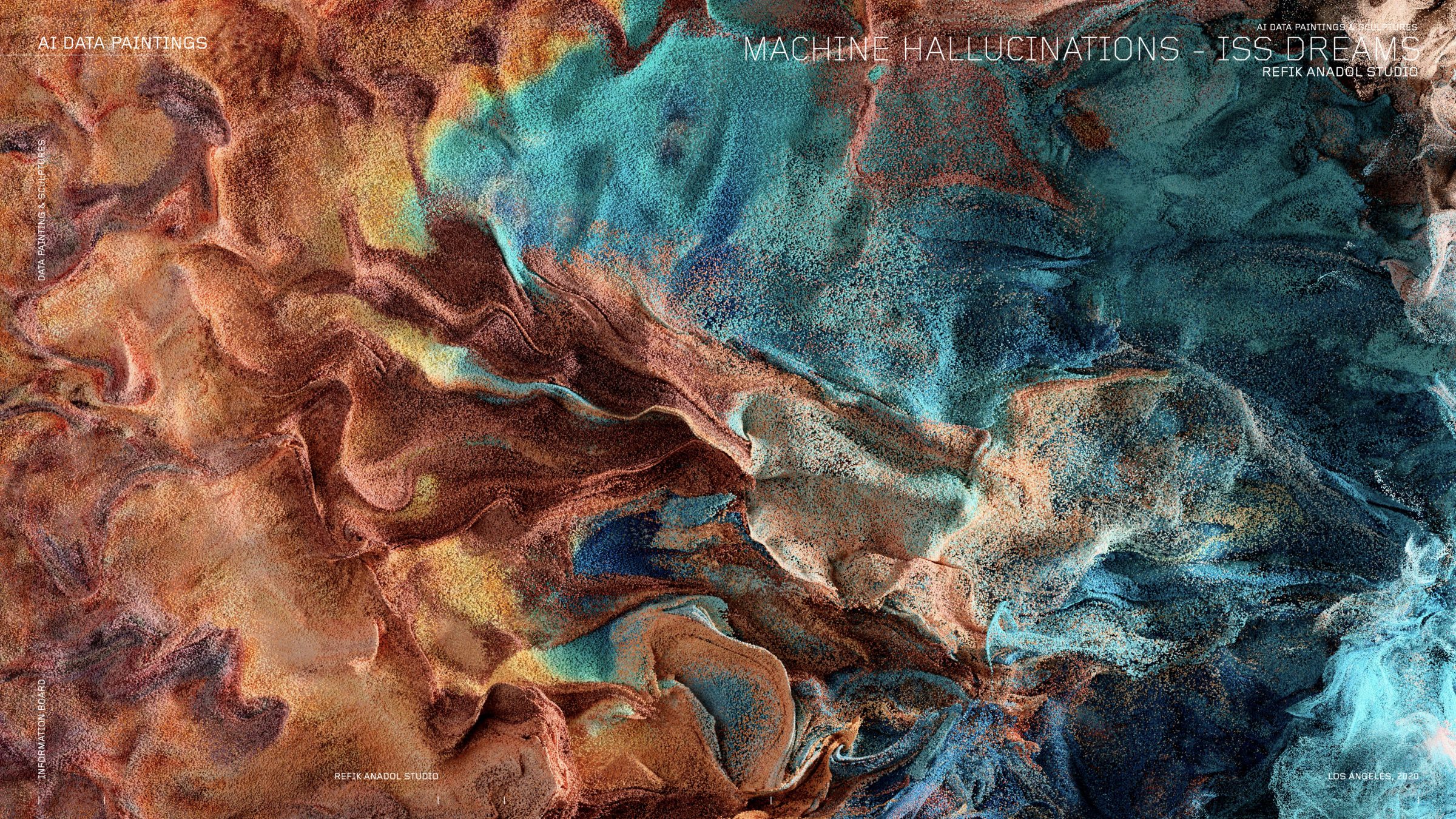
Refik Anadol, Machine Hallucinations – ISS Dreams Los Angeles, California, The states 01/06/2020 / Courtesy Refik Anadol Studio AG: You have made works in which you lot enquire the question, "what would it be like if a automobile had a consciousness and could dream?" Of course, this can exist seen as both a fascinating and terrifying idea in regards to the time to come of technology. I have read that y'all tend to lean more than on the "utopian" side of the spectrum, explaining how when we were given fire at the dawn of time, we were using it for good – such equally cooking food – and for evil, by weaponizing it, for example. There is an idea by the philosopher Yuval Noah Harari has described a possible future of humans moving abroad from being "humanists" and rather "dataists," where nosotros will rely so much on data that somewhen, we won't need to rely on our feelings and instincts any longer.
RA: This is happening because we are used to information technology, considering we are pushed to do it. It isn't considering nosotros decide. I think that Harari also says that free will is already in the control of machines and systems. If the machine knows where I am going, what I am buying, what I am liking commenting, sharing… I mean, the machine knows everything nearly me… almost. Information technology's and so uncomplicated to manipulate someone's free will with a simple notification on a machine. And then in a globe similar this, I don't retrieve anyone is really aware still of why we are becoming similar this. I am just rushing to say to humanity that, earlier this happens, please exist aware and appreciate the senses that we take, earlier they go too simulated.
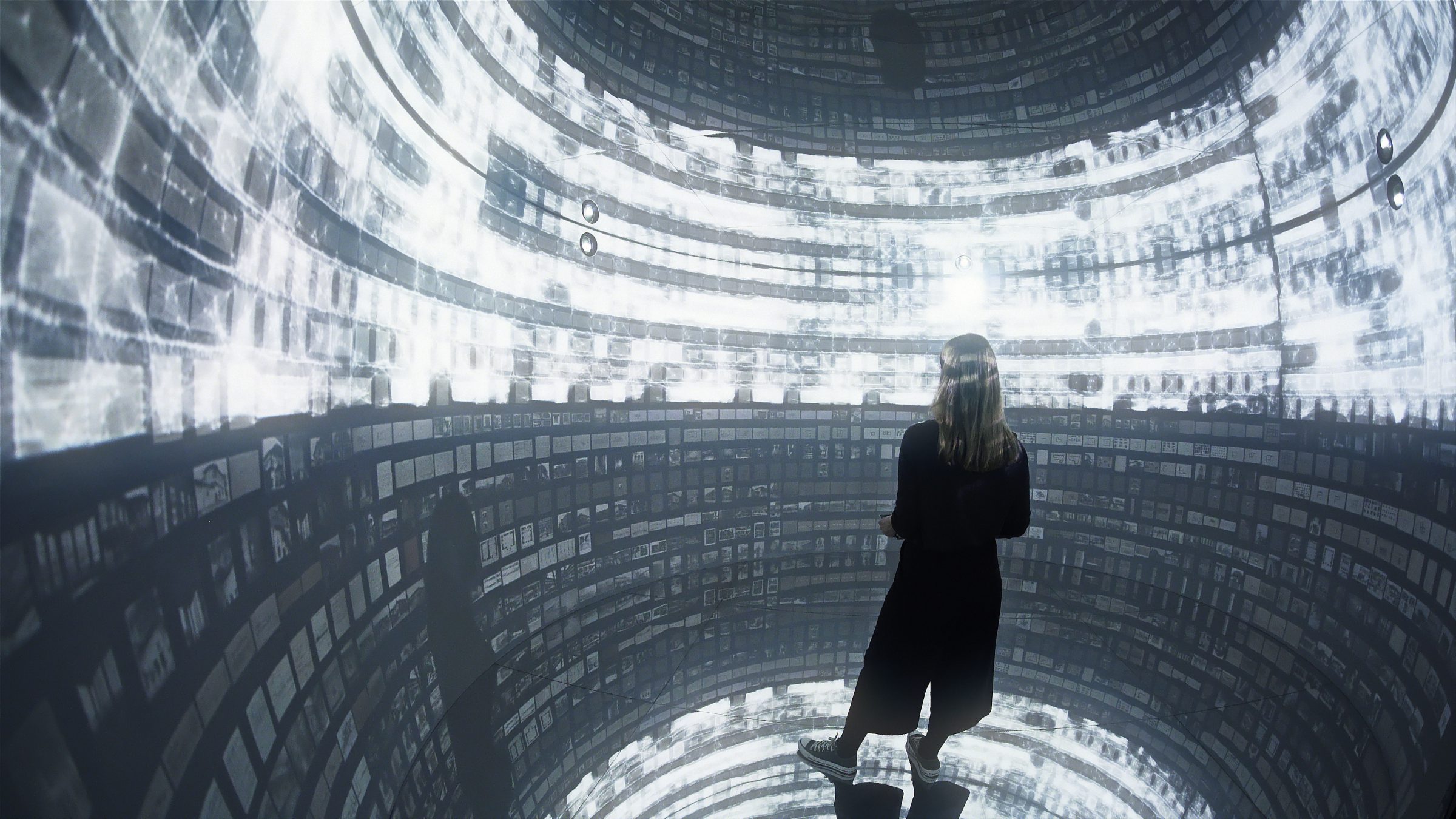
Refik Anadol, WDCH Dreams, Archive Dreaming
Public Art - Installation
San Francisco, US 02/03/2017 – 04/ten/2017 / Istanbul, TR 04/20/2017 – 07/eleven/2017
6 Meters Broad Circular Architectural
Installation 4 Channel Video, viii Channel Audio, Custom Software, Media Server, Table for UI Interaction Courtesy Refik Anadol Studio
AG: You have also said that machines can brand us "more sensitive".
RA: I think a machine tin can brand usa more and more than aware of our environs. There are people who don't understand, for example, people with Alzheimer'south, or issues like climate change, can exist helped [with machine learning.] However, while we are getting something completely valuable for humanity, we are likewise losing our near valuable things, such as our free volition, and perhaps our consciousness, and and then our memories. We are all in the aforementioned perfect problem moment that we notwithstanding have a adventure to speculate this, to fight [to make information technology better] or to just leave it.
AG: Have yous thought near how your work can chronicle to these ideas?
RA: Pretty much all of my work is centered around these ideas. Nosotros work with data, how a space feels, it's not hard to imagine what can happen if a building can dream, or imagining what can happen if a machine tin can learn or dream – to me, information technology is a super unproblematic question. Especially if it happens in a library, where we acquire about reality and history. Eventually what we can learn is to enquire, who will define what is real? These are very primal questions in Annal Dreaming or Melting Memories. What will happen to our memories? Many of my artworks create these speculations. What will happen? The ramifications are ever there, but I am wondering what else nosotros can do with them. I am very hopeful, but I am still thinking that these questions need to be asked, and to be hopeful, to make it at a "utopia".
Source: https://www.xibtmagazine.com/2020/10/augmenting-perception-an-interview-with-media-artist-refik-anadol/
0 Response to "Google Play Music Expanse Podcast Fight or Flight Core Temp Art"
Post a Comment